
American Bison
Common Names: American Bison
-
Scientific Name: Bison bison
-
Subspecies: Plains bison and wood bison
-
Conservation Status: Near Threatened (NT)
-
Habitat: Prairies and grasslands in North America
-
Diet: Herbivore
-
Height: 5 to 6.5 feet
-
Weight: 700 to 2,000 pounds

What is an American bison?
The American bison, often called a buffalo, is the largest land mammal in North America. Once found across much of the continent, bison have long been important to both the environment and the history of the Great Plains. Although their numbers dropped dramatically in the 18th and 19th centuries, conservation efforts have helped restore parts of the population over time.
Subspecies
The American bison is divided into two subspecies: the Plains bison (Bison bison bison) and the Wood bison (Bison bison athabascae). While they may look similar at first glance, several characteristics set them apart. As their names suggest, they inhabit different environments, with Plains bison typically living in grasslands and prairies, while Wood bison are found in the forests and meadows of northern Canada and Alaska.
The two subspecies also differ in appearance. Wood bison tend to be larger and have a taller hump, longer legs, darker fur, and a less sharply defined shoulder cape than Plains bison. Their horns, back profile, and tail characteristics can differ as well.
The bison featured on Funny Little Critters is based primarily on the Plains bison, the more numerous and widely recognized of the two subspecies.
For a more detailed comparison of Plains and Wood bison, check out the National Park Service's guide to American bison subspecies.
Habitat
The habitat of the American bison depends on which subspecies you're talking about. The Plains bison prefer the wide-open grasslands of the Great Plains, while the Wood bison make their home in the forests, meadows, and river valleys of Alaska and Canada. No matter where they live, bison aren't big fans of staying in one place for too long. These shaggy giants are constantly on the move, roaming in search of fresh grass, water, and the next great grazing spot.

Diet
American bison are herbivores, which is a fancy way of saying they're professional grass eaters. Their favorite foods include grasses, sedges, and other low-growing plants, though they'll happily snack on shrubs and leaves when the menu changes with the seasons. A hungry bison can eat around 30 pounds of vegetation in a day, making them one of North America's biggest lawn mowers.
Behavior
Despite their massive size, bison are surprisingly social animals. For most of the year, males and females live in separate groups. Female herds are made up of cows, calves, and younger bison, while adult bulls often spend their time in smaller bachelor groups.
During the summer breeding season, known as the rut, bulls join the female herds in search of mates. To impress the ladies and establish dominance, males may bellow, posture, and occasionally clash heads with rival bulls. Once the breeding season ends, they usually return to their bachelor groups.
Bison also communicate using grunts, snorts, and deep bellows that can be heard across surprisingly long distances. They also rely on body language to warn rivals, communicate with their herd, and keep track of one another.
Conservation
The American bison's story is one of the greatest wildlife recoveries in North American history. Once numbering in the tens of millions, bison populations were reduced to only a few hundred animals by the late 1800s due to overhunting and habitat loss. Thanks to decades of conservation efforts by Indigenous communities, governments, ranchers, and wildlife organizations, their numbers have rebounded significantly.
Today, hundreds of thousands of bison live across North America in national parks, protected preserves, tribal lands, and private ranches. While the species is no longer on the brink of extinction, conservationists continue working to protect habitat, preserve genetic diversity, and expand opportunities for wild bison herds to thrive.
Our Bison Products


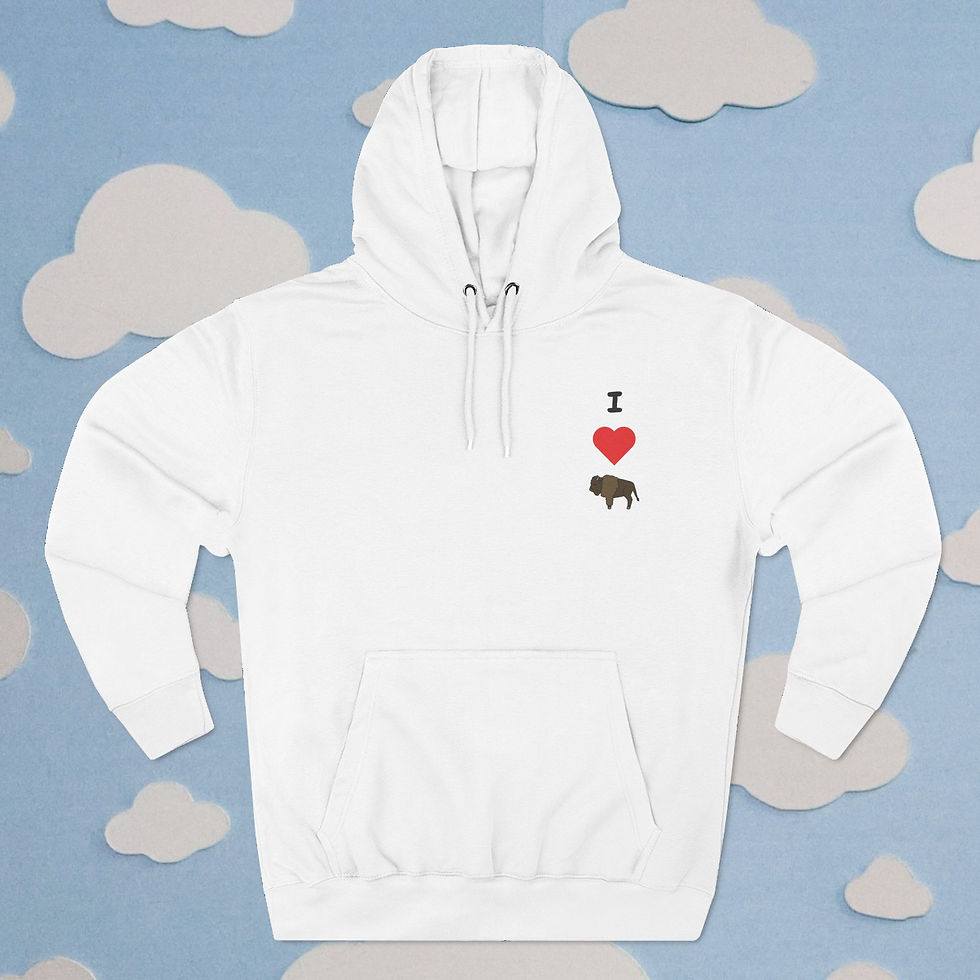
More featuring the bison


Sources:
https://www.fws.gov/species/plains-bison-bison-bison-bison
https://animaldiversity.org/accounts/Bison_bison/
https://www.nwf.org/Educational-Resources/Wildlife-Guide/Mammals/American-Bison
https://nationalzoo.si.edu/animals/american-bison
https://www.britannica.com/animal/bison
https://www.nps.gov/articles/bison-bellows-2-25-16.htm
https://www.biologicaldiversity.org/species/mammals/plains_bison/natural_history.html